Oingt, Glay and the Prieuré: Beaujolais written in stone
Read Beaujolais through its stone, compare official walks at Oingt, Glay and Salles-Arbuissonnas, and account for Glay’s partial closure.
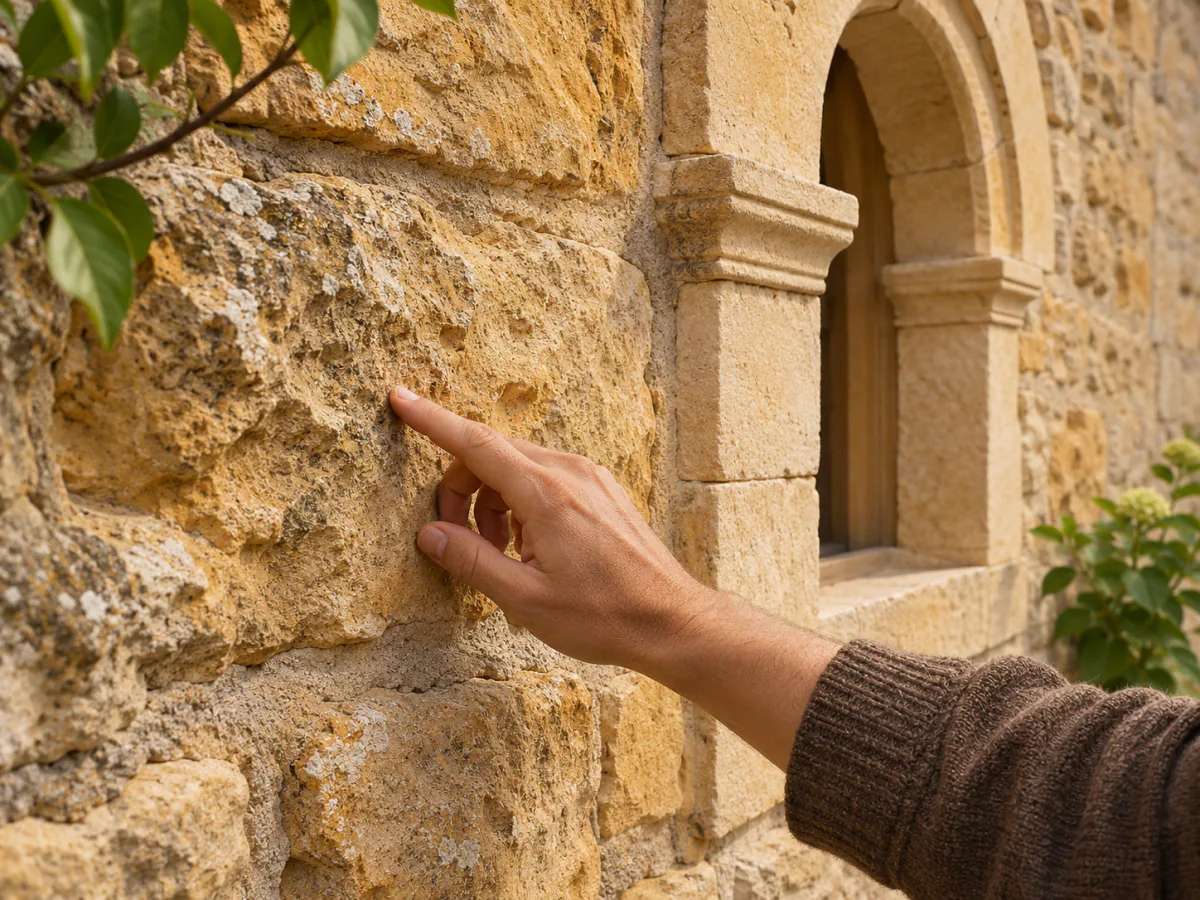
In Oingt, the wall beside you and the ridge beneath your feet belong to the same geological story. The village’s yellow-ochre limestone was once marine sediment; later, people cut it into the blocks that give these streets their colour. Step out towards the surrounding hills and the story continues in the ground, the vegetation and the shape of the countryside.
That connection gives you a thread to follow through the Beaujolais UNESCO Global Geopark. At Glay, the same type of limestone supported centuries of quarrying. Around Oingt, the official walk takes you from medieval lanes to limestone hills. At Salles-Arbuissonnas, the Prieuré’s buildings use a wider range of rocks. Choose your walk by the part of that story you want to understand.
At Glay, the building stone still has a seabed inside it
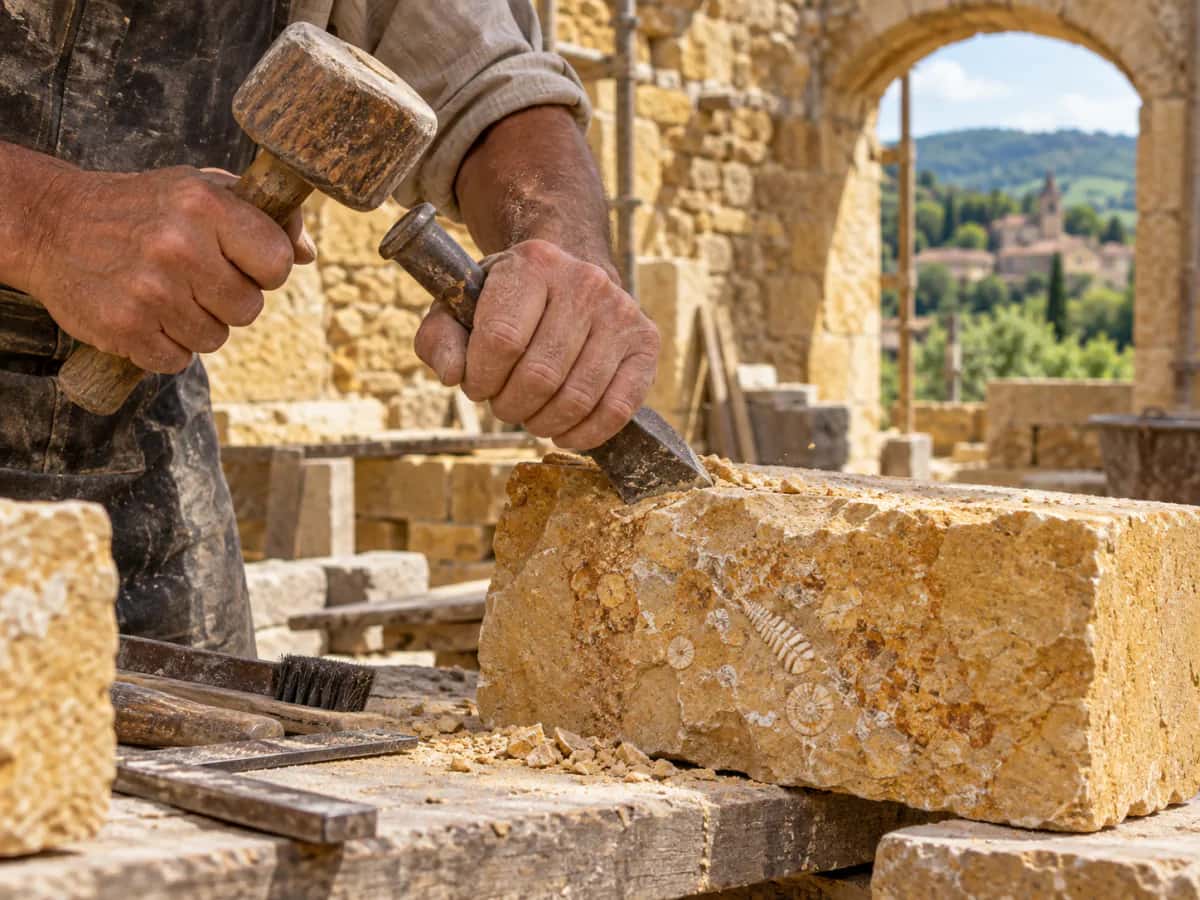
The Géoparc identifies the golden limestone quarried at Glay as calcaire à entroques, the same rock type found in Oingt’s walls. The Géoparc’s rock collection dates its samples of golden limestone to the Aalenian age, about 173 million years ago. Fossilised fragments of marine animals help make up the rock, while iron oxides contribute to its yellow, ochre and darker colours.
The Glay leaflet traces this stone back to crinoids, marine animals whose broken skeletons became mixed with sediment on the seabed. Layer after layer formed the calcaire à entroques. A village wall can therefore carry two histories at once: the life of an ancient sea and the work of the people who shaped the blocks.
Glay’s quarries lie at Saint-Germain-Nuelles. Quarry workers extracted building stone here from the 15th century until 1947, supplying southern Beaujolais and the Lyon area over some 500 years. The Géoparc describes this local Pierre Dorée (“golden stone”) as a soft stone that builders could cut and carve for walls, corners, window surrounds and lintels. Looking for those different jobs gives you something more precise to do than admire a uniformly golden façade.
Before planning a visit, note the partial closure at Glay. As of 6 November 2026, the official quarry listing carried a notice, in place since May 2024, closing part of the site and the entire path along the quarry-face crest because of rockfalls. Check with Saint-Germain-Nuelles town hall or read the current notice on site, and respect the closure.
Oingt carries the limestone story out into the hills
Oingt’s medieval lanes are lined with golden limestone walls. Compare a roughly shaped block with a more carefully worked opening and look at how their surfaces differ. Step back and the tight cluster of buildings gives the village its recognisable ridge-top silhouette.
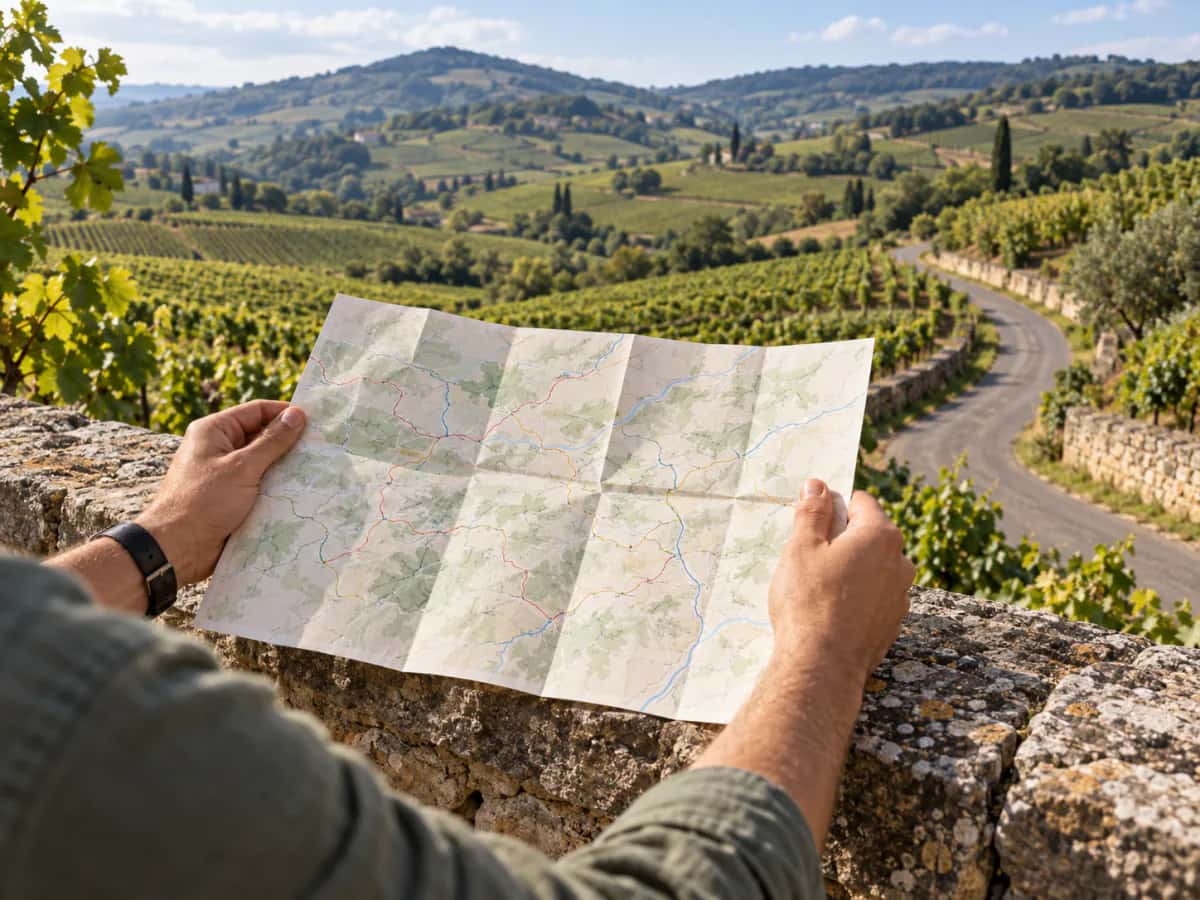
The official walk, Sur les hauteurs d’Oingt, starts at Place de Presberg and heads into the surrounding heights. Its leaflet describes the Crêts de Rémont and Bansillon, with heath, coppice, meadows and dry grassland on limestone soils. Leaving the village streets for open countryside lets you compare the stone in the buildings with the limestone ground around them. The leaflet lists 6.4 kilometres, 210 metres of ascent and 2 hours 10 minutes of walking, with an easy grading.
Below the village to the west, the undated leaflet links a band of marly ground to the establishment of an artisanal tileworks at Prosny. It describes small fossils in a nearby quarry as traces of the abundant life in Jurassic seas, bringing the marine story told at Glay back into Oingt’s landscape. Leave the plants and stones where they are; photographs make a more useful record of their setting.
At the Prieuré, each period chose its own stone
At Salles-Arbuissonnas, the 12th-century Romanesque cloister is built in golden stone. The operator of the Prieuré museum describes it as the last Romanesque cloister in the French department of Rhône. The Géoparc’s Prieuré leaflet follows the site’s history from Cluniac monks to the canonesses-countesses and their 18th-century noble houses.
Across the Prieuré site, from cloister to church, the Géoparc finds almost the full range of Beaujolais rocks represented in the architecture. Its leaflet sets the site in a geological transition, with ancient volcanic rocks between granite to the north and limestone to the south.
Those buildings let you compare choices of stone, cutting and sculpture from one period to the next. Look at textures, grain and the way blocks have been worked, then find where the stone and its finish change from one building to another. The leaflet also describes a museum visit focused on the site’s geoheritage.
For more time on foot, the Géoparc’s Prieuré leaflet lists the Sentier des Caudalies at 11.6 kilometres and 3 hours 30 minutes, with a moderate grading. The walk starts at the junction of Rue du 11 Novembre and Rue du Breuil in Salles-Arbuissonnas.
The museum operator lists a season from 1 March to 30 November, with the museum closed outside that period. The undated Géoparc visitor listing also names 11 November as an exceptional closure date. For an autumn trip, confirm the museum’s opening for your date; if you add the Caudalies walk on the same day, allow for the shorter daylight.
Choose between Oingt’s hills, the Prieuré’s stonework and Glay’s quarries
The official leaflets attach walking routes to geosites. Treat them as separate outings, each with its own starting point and character.
| Starting interest | Official walking reference | Published walking estimate | Practical cue |
|---|---|---|---|
| A village and its limestone hills | Sur les hauteurs d’Oingt | 6.4 km; 210 m ascent; 2 hr 10 min; easy | Leaflet start: Place de Presberg |
| Architecture and contrasting rocks | Sentier des Caudalies, Salles-Arbuissonnas | 11.6 km; 3 hr 30 min; moderate | Leaflet start: Rue du 11 Novembre / Rue du Breuil |
| Quarrying and stonework | Glay micro-adventure | 9 km; 140 m ascent; 3 hr 30 min in the leaflet | Leaflet start: Place de l’Église, Saint-Germain-Nuelles; confirm access: part of the site and the crest path are closed |
The Géoparc’s micro-adventure collection links to French-language leaflets for these outings. For Oingt and Salles, save the relevant leaflet and its map before setting off. The undated Glay leaflet describes a food walk with advance booking to receive the itinerary and an information pack about the site, and to order a picnic of local produce. Confirm that the activity is currently running before arranging your outing.
My first choice for someone curious about both villages and landscapes would be Oingt: it offers a manageable walking distance and a direct connection between the streets and the surrounding limestone country. At Salles-Arbuissonnas, choose the Prieuré for its architecture, and add the Caudalies walk if you want more time on foot. Choose Glay for its quarrying history and worked stone.
Bring your questions from the hills to the cellar
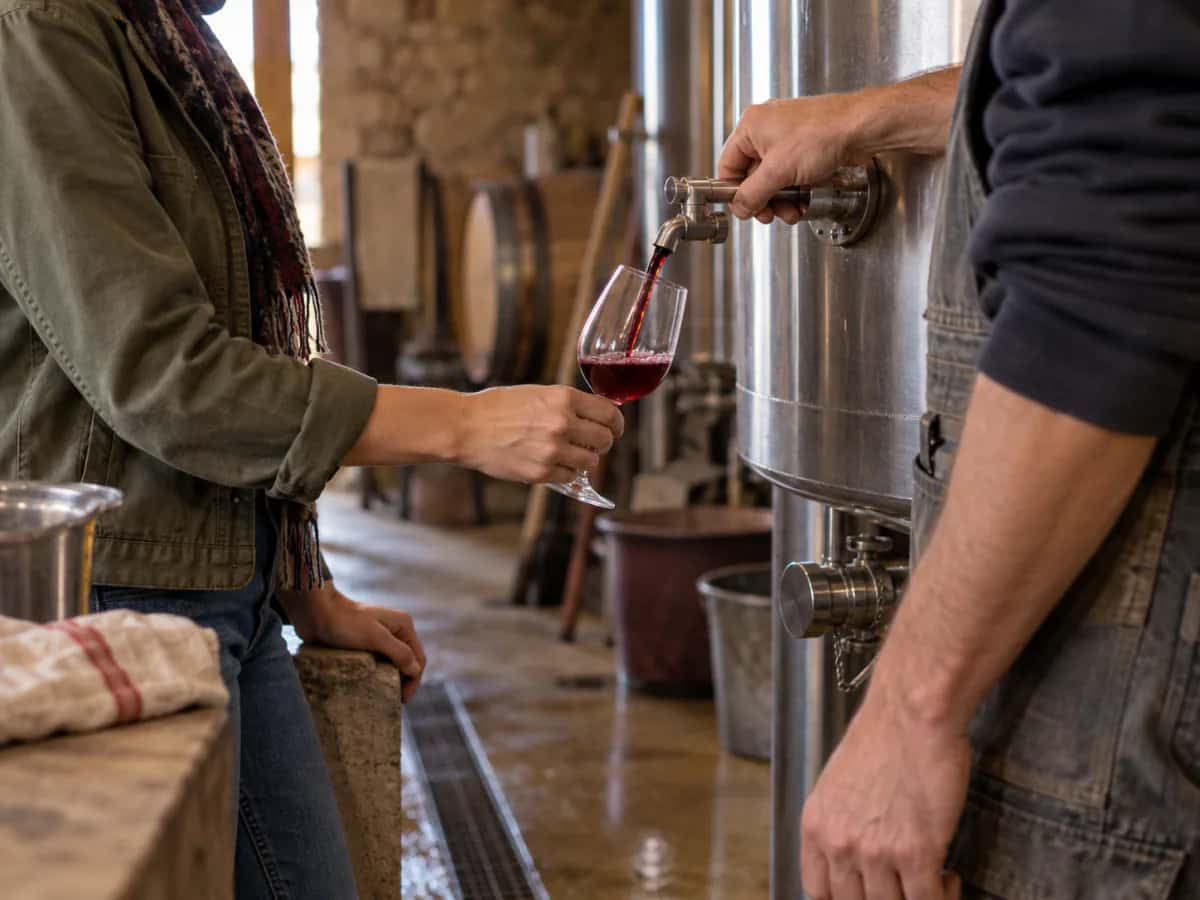
The Géoparc’s undated Oingt leaflet offers a concrete link between rock and bottle. It describes Les Pépites des Pierres Dorées, a range of four parcel wines from Les Vignerons des Pierres Dorées, whose labels show the dominant rock of each parcel. The leaflet places their tasting cellar in Oingt. To follow that link into a tasting, arrange a visit separately from your walk. If you are shown one of those bottles, ask which parcel it comes from and how the rock on the label relates to the soil around the vines. The answer may lead you to different ground from the limestone hills you have just walked.
In its account of Beaujolais terroirs, the Géoparc brings rocks together with climate, relief and the grower’s choices, describing distinctive terroirs linked to a single grape variety. Use the label as a starting point for those wider questions: how does the slope affect work in this parcel, and which choices does the grower make in the vineyard and at harvest?
Whichever bottle you end up asking about, the habit begins on Oingt’s walls: look at one closely before setting off, then look back at the village from the hills. That small change of scale turns golden stone from a colour into a material you can begin to read.
Explore more Travel Guide stories and the complete Visit Beaujolais guide.