Beaujolais wine route map: how to choose among the 7 circuits
Compare the 7 official Beaujolais wine route circuits by distance, stops and travel style to plan a half-day, full day or weekend itinerary.
The Beaujolais wine route is not a single drive that must be completed from end to end. Its 140-kilometre spine is divided into seven short circuits, each centred on a distinct part of the region. The useful question is therefore not simply where the route begins, but which route matches your time and interests. For a half-day, full day or weekend, the right answer depends more on planned stops than on driving distance.
What the official map actually shows
The route runs through the Beaujolais vineyard between the outskirts of Lyon and southern Burgundy. Along the way it covers 12 appellations, including the 10 Beaujolais crus, as well as the Beaujolais-Villages area and the golden-stone country in the south.
Destination Beaujolais divides that corridor into seven mapped circuits of 12 to 19 kilometres. The roadbook presents them as one-day tours, but the distance alone is misleading: cellar visits, village walks and viewpoints take far more time than the driving. A short route works for a half-day only if you limit yourself to one main visit and one pre-booked tasting.
The 7 circuits at a glance
Discover Beaujolais · map
The seven Beaujolais wine route circuits
Explore the seven official wine route itineraries, their roadbook distances and selected villages.
- 1. Juliénas · 13 km
- 2. Fleurie · 13 km
- 3. Beaujeu · 19 km
- 4. Mont Brouilly · 12 km
- 5. Clochemerle · 18 km
- 6. Villefranche · 16 km
- 7. Oingt · 18 km
The published distances below come from the official roadbook. Some downloadable tracks include connections to the next circuit, and some listed villages sit away from the line. These routes do not necessarily return to their starting point.
| Official circuit | Distance | Best fit | Stops and character |
|---|---|---|---|
| Juliénas | 13 km | First visit or family day | Saint-Amour-Bellevue, Juliénas, Chénas and Romanèche-Thorins; northern crus plus the Hameau Duboeuf and Touroparc options |
| Fleurie | 13 km | Views and cru comparison | Fleurie, Chiroubles and Villié-Morgon; the Madonna chapel, the Terrasse de Chiroubles and the Côte du Py |
| Beaujeu | 19 km | Wine history | Beaujeu, Lantignié, Régnié-Durette, Quincié-en-Beaujolais and Cercié; the historic heart of the region |
| Mont Brouilly | 12 km | Geology and panoramas | Saint-Lager, Mont Brouilly, Odenas and nearby villages; the Géoscope, hilltop chapel and Brouilly vineyards |
| Clochemerle | 18 km | Literature and heritage | Vaux-en-Beaujolais, Salles-Arbuissonnas, Blacé and neighbouring villages; Gabriel Chevallier's Clochemerle and a 12th-century priory |
| Villefranche | 16 km | Town and countryside | Villefranche-sur-Saône and Theizé; urban heritage followed by a golden-stone hilltop village with its castle and church |
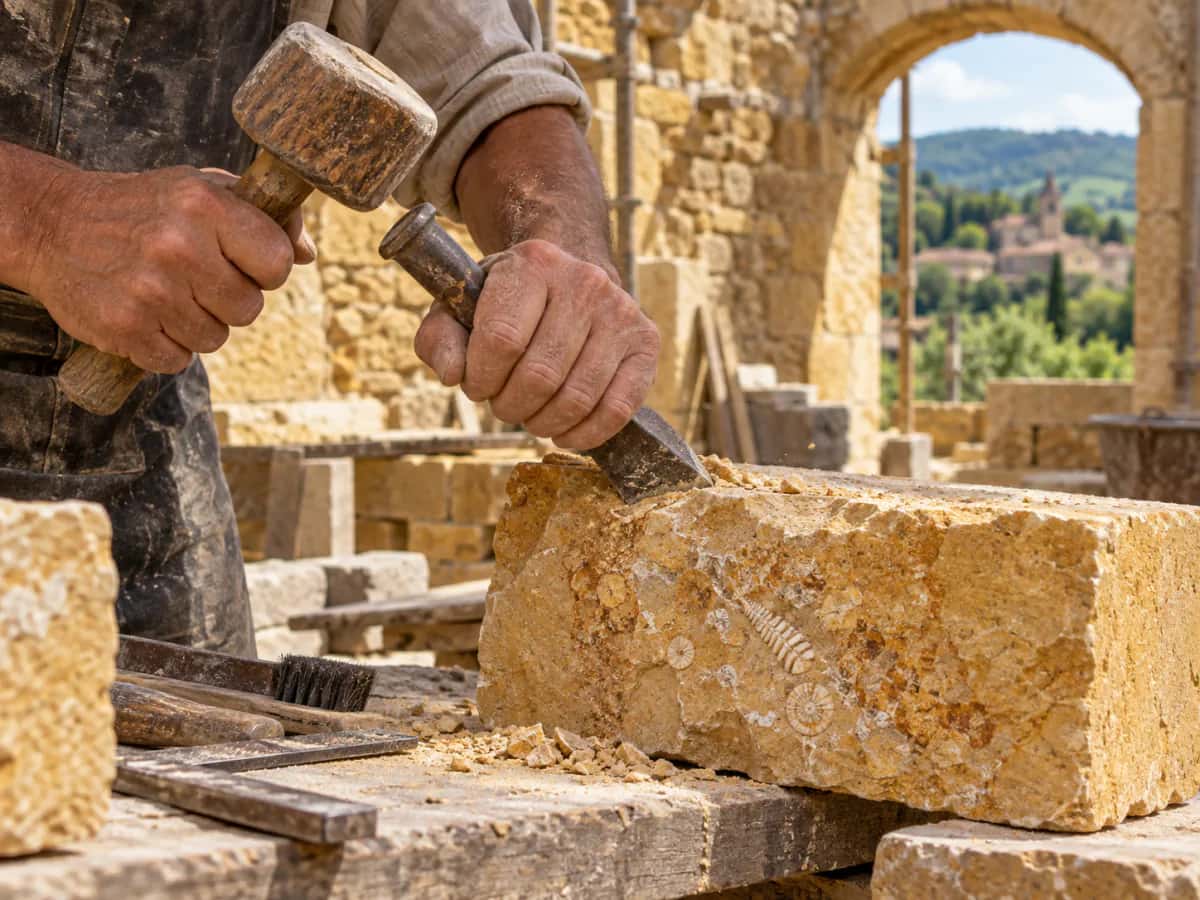
| Oingt | 18 km | Golden-stone villages | Oingt, Le Bois-d'Oingt, Bagnols, Alix and Charnay; medieval lanes, craft workshops and ochre-stone scenery |
A north-to-south shortcut
Crus and tastings: Juliénas → Fleurie
Wine history and geology: Beaujeu → Mont Brouilly
Village and architectural heritage: Clochemerle → Villefranche → Oingt
This is a simple orientation aid, not a driving itinerary. It places the northern cru circuits first, the historic and geological heart in the middle, and the golden-stone country in the south.
Choose by the time you have
Half a day: keep the plan deliberately small
For a compact introduction, choose Juliénas, Fleurie or Mont Brouilly. Each is among the shortest circuits and has a clear focal point. Juliénas suits visitors who want named crus and an indoor attraction. Fleurie puts the emphasis on vineyard views. Mont Brouilly combines a short road route with geology and a hilltop panorama. Do not try to complete every listed stop in four hours. Pick one village, one viewpoint and one booked cellar.
One full day: follow one circuit properly
A full day lets you use any of the seven circuits as intended. Beaujeu is the strongest choice for regional history, while Clochemerle combines wine country with literary and religious heritage. Families can build the Juliénas circuit around Romanèche-Thorins, where the official route lists both the Hameau Duboeuf wine attraction and Touroparc. Check opening days and age-appropriate activities directly before travelling.
A weekend: pair neighbouring circuits
For a wine-led weekend, combine Juliénas and Fleurie. Together they introduce several northern crus without forcing you to cross the whole region between tastings. For architecture and villages, combine Villefranche and Oingt: the first adds urban heritage and the second gives the Pierres Dorées landscape more time. Another balanced pairing is Mont Brouilly followed by Clochemerle, moving from geology and vineyards to village history.
Choose by what you want to experience
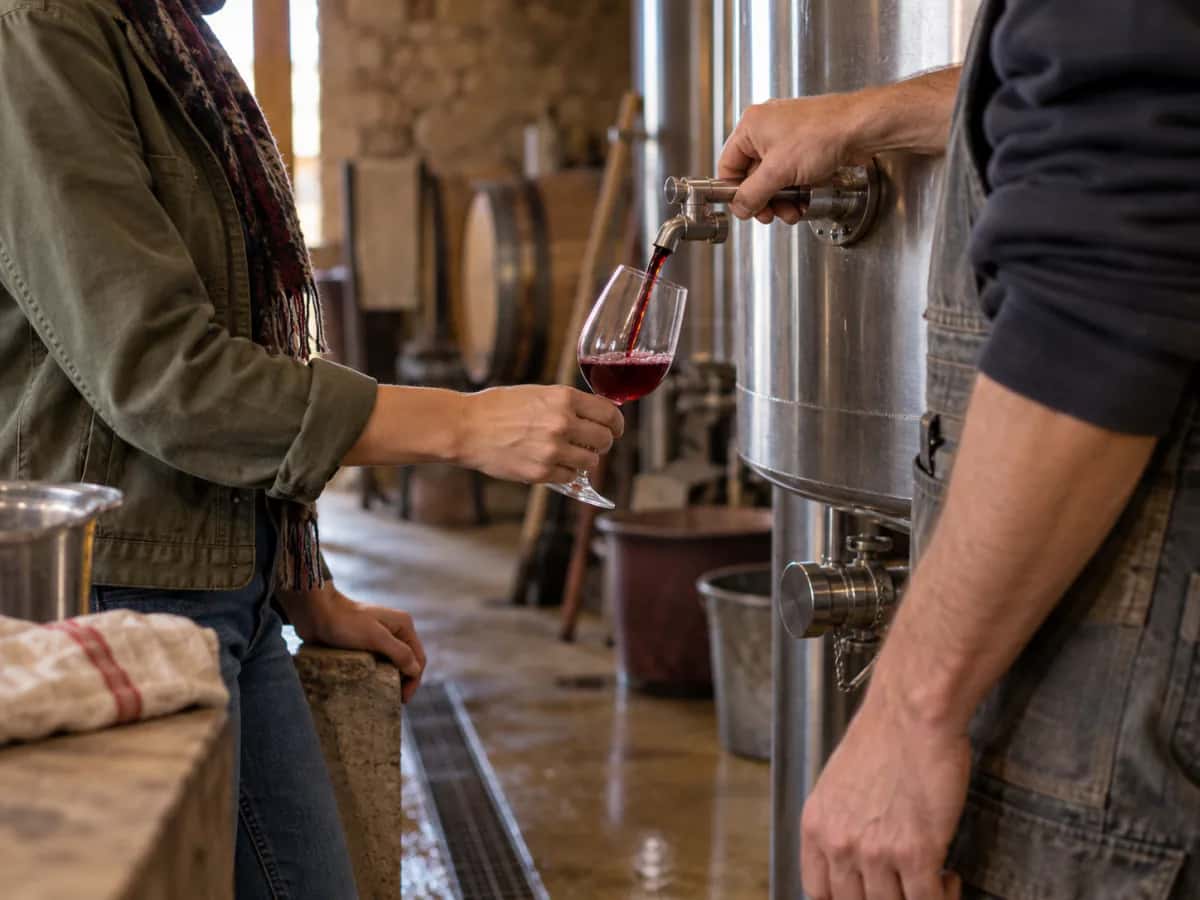
For tasting, start with Juliénas or Fleurie and reserve with estates before arrival. The live route pages show that many cellars operate by appointment, and availability changes. Two substantial tastings are usually more useful than a rushed sequence of cellar doors.
For heritage, Beaujeu, Clochemerle and Villefranche offer the clearest themes. Beaujeu explains the region’s historic centre; Vaux-en-Beaujolais turns a literary satire into a village visit; Salles-Arbuissonnas preserves its 12th-century priory; and Villefranche combines urban heritage with the hilltop architecture of Theizé.
For scenery, Fleurie and Mont Brouilly provide the most explicit viewpoint-led routes. Oingt is the better choice when the villages themselves are the landscape, with warm limestone, fortified lanes and views from the medieval tower.
Plan the day before you drive
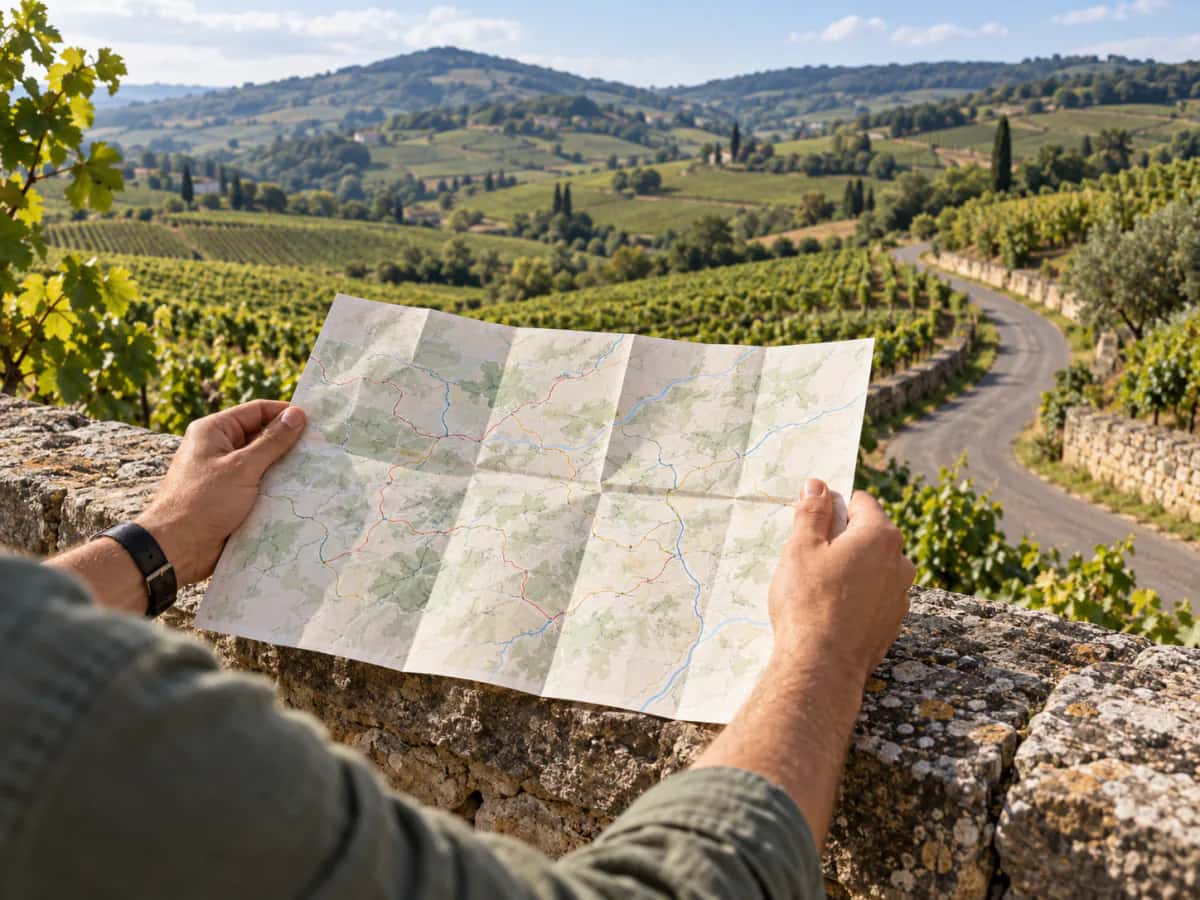
Download the current route map, then confirm each visit with the venue rather than treating the directory as a live timetable. Book tastings, leave room for a village walk, and choose lunch before setting out. If everyone in the group wants to taste, arrange a guided wine tour or another driver. Use the seven circuits as choices, not a checklist. A first-time visitor can learn more from one well-paced route than from racing along the full 140 kilometres. Match the map to one priority, whether crus, scenery, family activities, history or golden-stone villages, and let that choice set the pace. The best circuit is the one that leaves enough time to stop, not the one that covers the most kilometres.
Choose one route that matches your priority, confirm the stops before leaving, and give each visit enough time to matter.
Explore more Travel Guide stories and the complete Visit Beaujolais guide.