Unraveling the influence of Beaujolais soils
In Beaujolais, the wines are shaped as much by the land as by the grape. How the region’s diverse soils, from granite-rich hills to clay valleys, influence the flavors and styles of its most celebrated wines ?
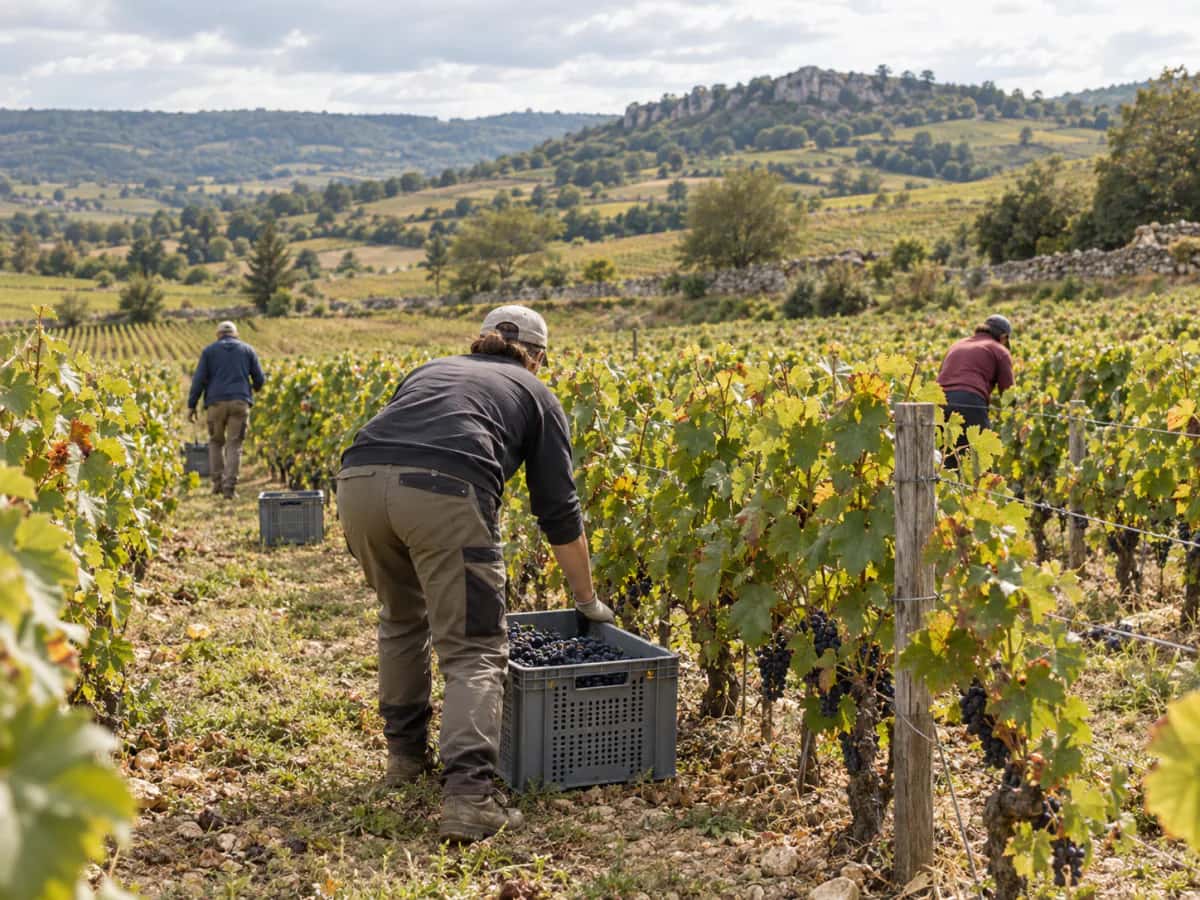
The Beaujolais region, nestled between the Burgundy wine region and the city of Lyon, may be small in size, but its soils are incredibly diverse. This diversity is a crucial factor that shapes the character of its wines, especially as the region relies predominantly on a single grape variety, Gamay, for its red wines. Understanding the influence of the various soil types in Beaujolais helps to explain the remarkable range of wine styles found in the region, from the light, fruity Beaujolais Nouveau to the complex, age-worthy wines of the Beaujolais Crus.
A complex geological history
Beaujolais has a geological history that spans over 500 million years, resulting in a remarkable variety of soils across the region. This small area is home to more than 300 distinct soil types, reflecting a mix of volcanic, sedimentary, and metamorphic formations.
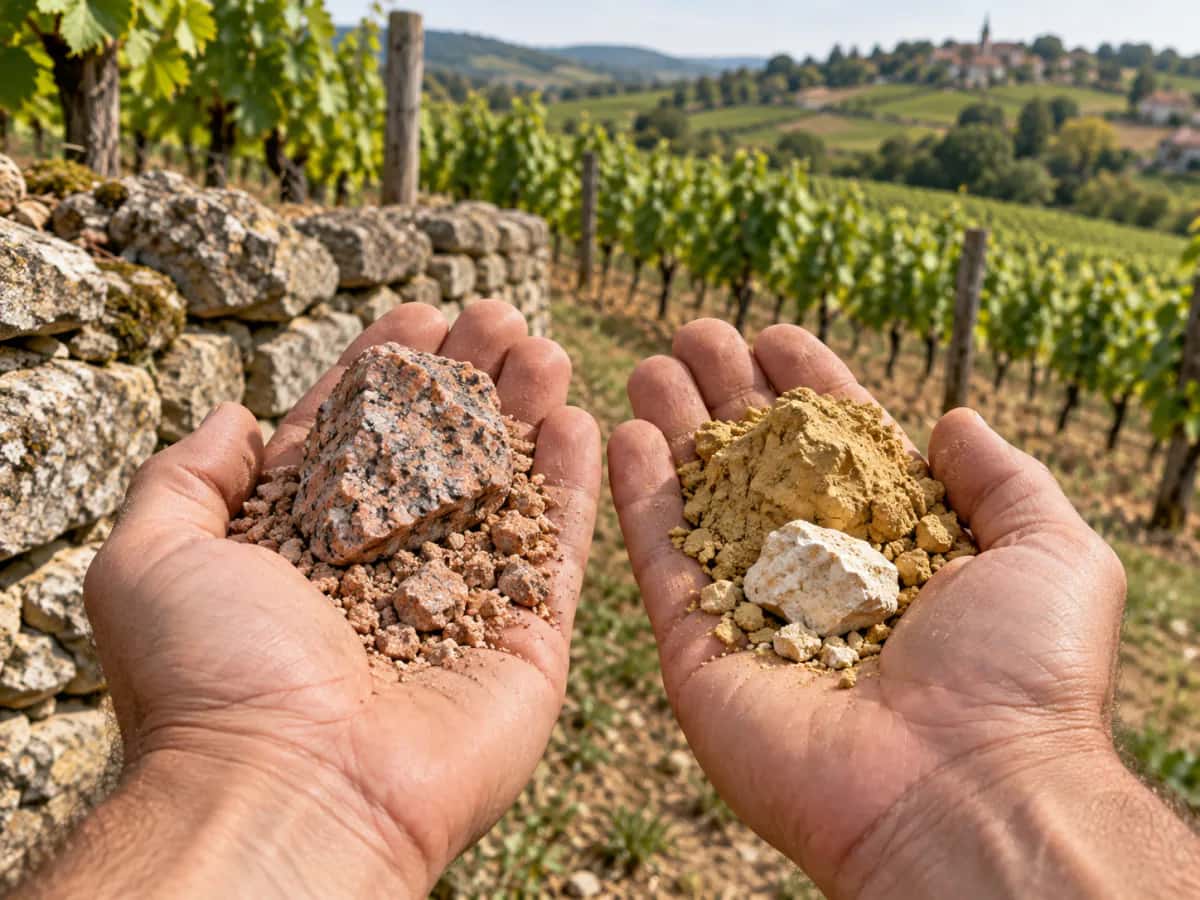
The region’s soils can be broadly divided into two main types: granite-based soils in the northern part, and clay and limestone in the southern part.
This geological diversity is not just a matter of academic interest; it has a direct and profound impact on the wines produced here. As we explore the key types of soil in Beaujolais, we will see how the interplay between geology and viticulture defines the unique flavors and structures of the region’s wines.
Granite: the backbone of northern Beaujolais
The northern part of Beaujolais is dominated by granite soils, particularly in the region’s 10 Crus, the highest classification of Beaujolais wines. These soils are poor in nutrients but offer excellent drainage, which forces the Gamay vines to dig deep into the subsoil, developing strong root systems. This struggle results in wines that are more concentrated, with pronounced minerality and structure.
Granite is particularly prevalent in Crus like Morgon, Fleurie, and Moulin-à-Vent. The granite-rich soils of Moulin-à-Vent, for example, are known for their high manganese content, which contributes to the tannic structure and ageability of the wines. These wines often have notes of dark fruits, earthy undertones, and a mineral quality that sets them apart from lighter, more approachable Beaujolais.
In Fleurie, where pink granite soils dominate, the wines are softer and more floral, reflecting the terroir’s influence with elegant notes of violets, red berries, and a silky texture.
The granite soils here provide the ideal conditions for wines that are more refined and delicate but still have the underlying structure to age gracefully.
Clay and limestone: the heart of southern Beaujolais
The southern part of Beaujolais presents a very different soil composition, dominated by clay and limestone. These soils, particularly in the area known as Les Pierres Dorées, are more fertile and retain moisture better than granite, which results in wines that are lighter, fruitier, and meant for earlier consumption. The wines produced here, such as Beaujolais Nouveau and Beaujolais-Villages, are often characterized by their vibrant red fruit flavors, such as cherry and raspberry, and a more easy-drinking style.
The clay-limestone soils in the south also give the region its distinctive landscape, dotted with golden-hued buildings that have earned it the nickname "Little Tuscany". The fertility of these soils supports higher yields, which, combined with the use of semi-carbonic maceration, leads to fresh, youthful wines that are perfect for immediate enjoyment.
The crus of Beaujolais: a reflection of terroir
Beaujolais is perhaps best known for its 10 Crus, which are all located in the northern part of the region, where granite and volcanic soils dominate. Each Cru has its own unique terroir, and these differences in soil composition and topography give rise to the diverse styles of Beaujolais wines.
- Morgon: Known for its decomposed schist and granite soils, Morgon produces robust, earthy wines with flavors of black cherries and plums, and a strong mineral backbone. The wines of Morgon are some of the longest-lived in Beaujolais, often compared to those of neighboring Burgundy
- Côte de Brouilly: Set on the slopes of an ancient volcano, the vineyards here grow in rocky, volcanic soils. These wines are more structured than those of the nearby Brouilly Cru, with deeper fruit flavors and a distinct minerality
- Juliénas: Here, the soils are a mix of granite and schist, with pockets of clay and alluvial deposits. This variety of soils gives Juliénas wines their complexity, with a balance of fruitiness and earthiness
Terroir and the expression of Gamay
Although all red Beaujolais wines are made from Gamay, the terroir influences the grape’s expression significantly. On granite soils, Gamay produces wines with bright acidity, firm tannins, and intense mineral notes. These wines often have a floral edge, with aromas of violets and peonies, especially in the higher-altitude Crus like Chiroubles.
In contrast, the clay and limestone soils of the south produce Gamay wines that are softer, with more red fruit and spice notes, making them approachable and perfect for early drinking. This diversity of styles, all from a single grape, is one of the factors that make Beaujolais such an exciting region for wine lovers.
The soils of Beaujolais, from the granite hills of the north to the clay and limestone valleys of the south, are the foundation of the region's winemaking excellence. These varied terroirs allow the Gamay grape to express a remarkable range of flavors and structures, producing wines that are both diverse and distinctive. Whether you prefer the fruity freshness of a Beaujolais-Villages or the complex depth of a Morgon, the influence of the soil is a key ingredient in every bottle of Beaujolais wine.
Explore more Terroir & Climate stories and the complete About guide.