The three pillars of wine tasting
Tasting wine is a journey for your senses. Discover how looking, smelling, and tasting reveal the story behind Beaujolais wines, from their vibrant colors to their complex aromas and flavors.
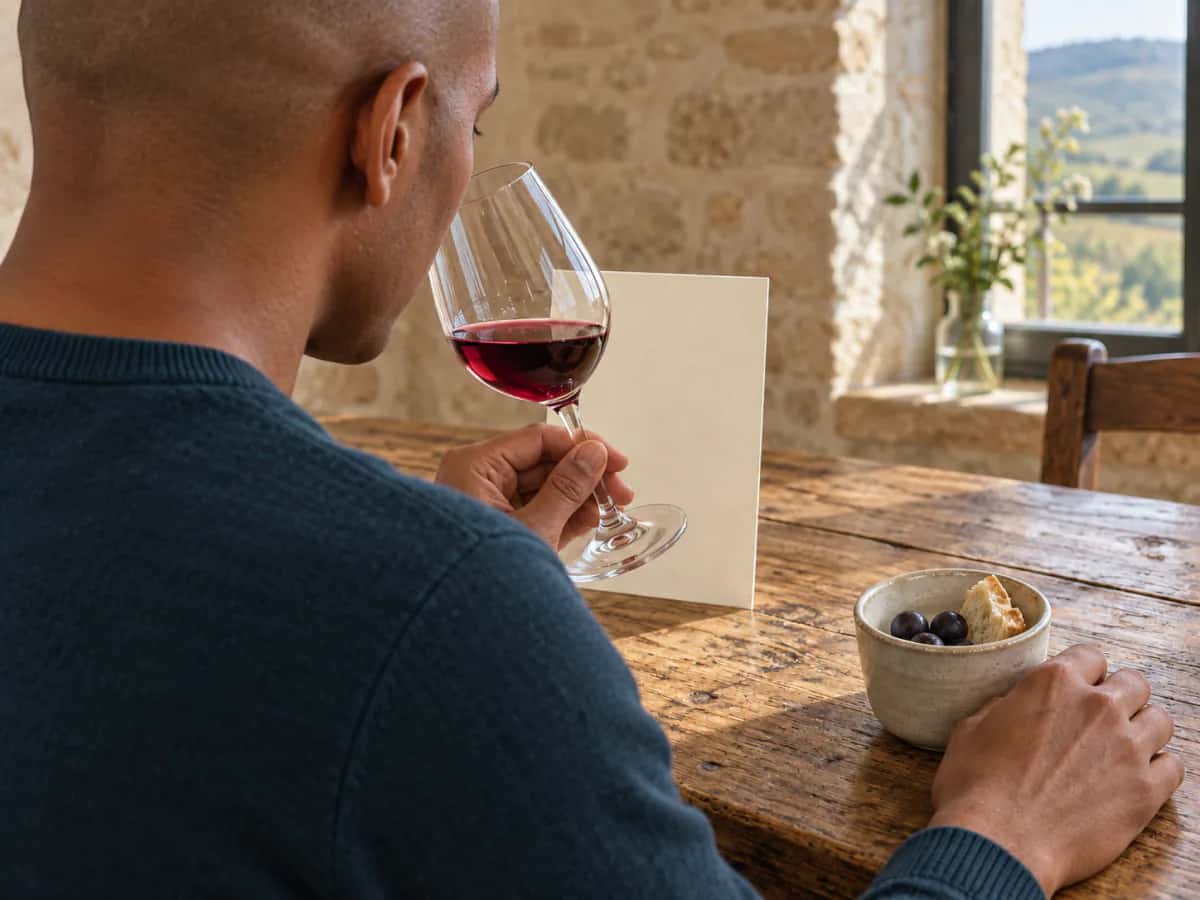
Wine tasting is not merely about drinking—it’s a journey through the senses that allows you to fully appreciate the craftsmanship behind each bottle.
The phrase "wine is tasted at least three times" encapsulates this multisensory experience: first by looking, then by smelling, and finally by tasting.
In the Beaujolais region, home to Gamay and a mosaic of terroirs, this method becomes a celebration of nature and tradition.
Looking: decoding the visual language of wine 👀
Before a single sip, wine communicates through its appearance.
This visual inspection provides crucial clues about the wine’s style, age, and quality.
1. Clarity and brightness
The clarity of a wine can reveal its purity and winemaking techniques.
A bright, clear Beaujolais often suggests a youthful, well-made wine.
Cloudiness might indicate an unfiltered, natural wine or potential flaws.
2. Color and hue
The color reflects the wine’s grape variety, age, and oxidation level.
A young Beaujolais Nouveau glows with vibrant purple-red tones, while a mature Moulin-à-Vent reveals deeper garnet shades, indicating development over time.
3. Intensity and rim variation
Holding the glass against a white background, observe the intensity of the color and the subtle gradation near the rim.
These details hint at the wine’s concentration and evolution. Beaujolais wines, particularly the crus, often display a lively, jewel-like vibrancy.
4. Swirling and legs
Gently swirl the wine to release its aromas and observe the streaks or "legs" running down the glass.
These indicate the wine’s viscosity, which is influenced by alcohol and sugar levels.
While Beaujolais wines are generally lighter, certain crus, like Morgon, may show slightly more pronounced legs due to their fuller body.
Smelling: capturing the soul of the wine 👃
A wine’s aroma is its most expressive trait, offering a complex symphony of scents that tell the story of its grape, terroir, and aging process.
- Primary aromas : these come from the grape itself. Gamay, the star of Beaujolais, is renowned for its red-fruit profile, with notes of cherry, raspberry, and cranberry. In younger wines, you might detect hints of banana or candy, a result of the carbonic maceration technique often used in Beaujolais Nouveau.
- Secondary aromas : these are developed during fermentation and winemaking. In Beaujolais, secondary aromas might include subtle hints of bread dough, yogurt, or even a touch of spice from oak aging in certain cru wines.
- Tertiary aromas : found in aged wines, these aromas develop with time and bring complexity. A mature Morgon or Fleurie might reveal earthy notes of forest floor, dried flowers, or even leather and truffle.
How to smell effectively
Approach smelling in stages:
- Take a neutral sniff for the first impression.
- Swirl the wine and inhale deeply to capture its complexity.
- Smell repeatedly to identify layers as the wine evolves in the glass.
This is where the magic of Beaujolais shines—the bouquet can transport you to the rolling hills and sun-drenched vineyards of the region.
Tasting: experiencing the wine on your palate 👅
Tasting is the culmination of the wine experience, combining all elements—visual and aromatic—into a multisensory moment.
1. The attack (first impression)
The initial sip reveals the wine’s structure and freshness.
Beaujolais wines are known for their crisp acidity, silky tannins, and bright fruit flavors. This immediate impression sets the tone for the experience.
2. Flavor profile
Let the wine spread across your palate, noting its sweetness, acidity, tannins, and body.
Beaujolais crus vary widely :
- A Fleurie offers a delicate floral elegance.
- A Juliénas surprises with spiced, berry-driven complexity.
- A Côte de Brouilly displays minerality and finesse.
3. Texture and mouthfeel
The tactile sensation is just as important as the taste.
Beaujolais wines often have a smooth, velvety texture, with some crus exhibiting a firmer structure.
4. The finish 🔚
The length of the wine’s flavor on your palate, known as the finish, indicates its quality.
While Beaujolais Nouveau tends to have a short, playful finish, a robust Moulin-à-Vent or Chénas can linger with earthy and fruit-driven notes for several seconds, leaving a lasting impression.
Wine tasting, especially in a region as diverse and expressive as Beaujolais, is about engaging fully with the wine.
By looking, smelling, and tasting, you unlock the story behind each bottle—the dedication of the winemaker, the uniqueness of the terroir, and the charm of the Gamay grape.
Next time you pour a glass of Beaujolais, take your time with each step. The reward is an unforgettable experience that transcends the wine itself.
Explore more Wine Tasting Guide stories and the complete Wines guide.